Categories

FOLLOW US ON TWITTER


Archives

  • 2010
  • 2009
  • 2008
  • Archive for June, 2009

    Jobs For Young Teens

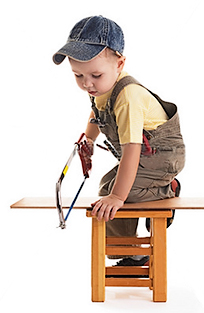
    picWhen I first joined the Wasabi Media Group team, I needed money rather badly to buy stuff, for a decent amount of spending money for a YMCA trip I am doing summer, and other usual teen money needs. Since I have began working a steady job, I have gained plenty of money.  I think jobs are good for teens, but for young teens, finding a job you legally can work at is hard.

    In New Hampshire (where I live), the law basically says that if you are under the age of fourteen, you cannot get a job and if you are under the age of sixteen, you need to get a New Hampshire Youth Employment Certificate, within 3 business days of the first day of employment, from the Superintendent of Schools, Guidance Department, or Principal’s Office in the city or town where you attend school. You may be denied if you have bad grades or a record of trouble.  NH law also says 16 or 17 years olds shall be employed by an employer if the employer maintains on file a signed written document from the youth’s parent or legal guardian permitting the youth’s employment.   There are some exceptions to the rule, though.  For example, I work for Wasabi Media Group, but I’m only thirteen.  That is because Wasabi Media Group is a my parents’ business.

    Here are some tips on jobs for under working age teens.  If your parents have a business, see if you you can work there. If not, there is the old teen stand-by: babysitting.  Personally,  I babysit and write.  If none of these work, try carving out some type of niche work.  Generally, competing with stores and/or chains of stores is hard, and you are almost guaranteed to lose.  Try something like baking or art.  Also, volunteering will get you known, so when you become of working age, more people will hire you.

    So, if you are a money strapped teen, try to get a job!

    Post to Twitter Tweet This Post

    What to Watch?

    picOne constant battle that we face in our house is trying to decide what movies and shows are appropriate for our eight year old. Commercials, print ads, and his friends constantly are bombarding our son with previews of TV shows, DVDs, and movies.

    My wife strongly prefers to preview the programs before Max gets to see them. This works well with TV shows. I generally can get a yea or nay on a show before the first commercial break.  DVDs have gotten easier to preview & judge thanks to the wonder that is Netflix.  We’ll get a movie from Netflix and preview a bit of it the night before we let the boys know it’s here.  If it’s a stinker, we send it back, and we’re only out a couple of days worth of movie watching.

    Movies are trickier.  There’s only one way to preview a movie that is playing in theaters.  There is no way I’m spending two hours and $8.50 to watch a kids movie without a kid so I can determine whether or not I’m going to have to spend another two hours and $17.00 + snack money to re-watch the kids movie with the kid. That’s just not happening.

    Sometimes I ask other parents, but I’ve found that the definition of ‘age appropriate’ can vary drastically from parent to parent.  That has proved relatively ineffective, unless I can find a parent who is on the same page as me AND has seen the particular movie I’m interested in seeing.

    There are plenty of websites that will weigh in with their opinion, but you’ve got to get into sync with the mindset of the writer or it is even less effective than the parent-friend referral.  I’ve even found that within one website, different reviewers will have different standards and, therefore, different levels of helpfulness.

    My personal favorite is www.pluggedinonline.com.  Part of the Focus on the Family organization, Plugged In tends to provide informative reviews with a minimum of disdainful opining.  For each movie reviewed, the site lists Positive Elements, Violent Content, Language, Alcohol, and Other Negative Elements.

    Does anyone out there have any other good sources for checking out a movie before showing it to the kids?

    Post to Twitter Tweet This Post

    Teach Your Child How to Deal with Anger

    picIt is natural for young kids to sometimes show strong emotions (like anger) and destructive behavior when things do not go their way. As parents, we need to know how to teach our kids the different ways of dealing with anger. Anger should be released, but it should be in a healthy way. If you can guide your child in the ways of releasing anger the healthy way, your child will develop a calm attitude as he grows up.
    Here are some of the things that you can do to help your child deal with anger the healthy way:

    • Be a good example to your child. Children are quick at mimicking what they see in their parents; when they see their parents explode when angry, there is a great possibility that it is exactly what they will do when they are angry. If you are the explosive type of person, teach yourself some simple techniques in controlling your anger. (There are hundreds of articles about simple anger management techniques that you can read.) Then teach it to your child. You must explain to your child that anger is natural, and every human being experiences it sometimes. When your child understands the nature of anger, it will be easier for her to manage it.
    • Guide your child when he is watching television or playing video games. The media is replete with violence, so it is important to guide your child every time he watches television or plays video games.
    • Be firm with your rules and give punishment when necessary, but do not show the ugly face of anger when you are punishing your child for a bad behavior.
    • When your child gets angry and shows destructive behavior, do not mirror it. It is a mistake to get angry when your child is angry; you are the parent so you should be in control. If you explode when she explodes, then everything is lost.

    Post to Twitter Tweet This Post

    Strategy Games

    picFor the longest time, I resisted my son’s pleas for a Pokémon trading card game. Ditto for Bakugan, Digimon, and a slew of other nonsense words that he threw at me. I didn’t know very much about it at the time, but the cartoon looked cheesy (it is), the game sounded complicated (it is), and I was pretty sure the whole thing would end up costing me a princely sum of money (it has).
    When Max got a $25 Amex gift card for his eighth birthday, I made the mistake of telling him that he could spend it on anything that he wanted. As it turns out, that’s just enough money to buy two Pokémon starter decks. I wasn’t crazy about the idea, but I didn’t want to go back on my word. And so it was that Max entered the Pokémon trading card game frenzy.

    The biggest problem is that two starter decks just aren’t enough. He needs a Fire deck, a Steel deck, and booster packs with special chromium card inserts and legendary Pokémon. He’s got a Pokémon Guide Book that he has worn the cover right off. He has studies these things with such alacrity that I have to think that he could be graduating from MIT by now if he put that much effort into his schoolwork. He knows their names, their types, their strengths and weaknesses.

    Meanwhile, Max’s little brother is too young to play, and his mom is too smart to get sucked into this debacle. So, you know who he’s going to practice against. And it isn’t enough that I play against him. We have to trade cards with each other, swap energy types, and discuss at length the merits of Water Pokémon vs. Fighting Pokémon. The game is absurdly complex, with Byzantine layers of rules and conditions. Did you know that his Pokémon can simultaneously burn and poison mine?

    Having said all that, in the final analysis the game is good for him. He’s learning to think strategically, which will help him throughout his life. And since I’ve started insisting on a chess match between Pokémon games, he’s learning to play a strategy game that will last beyond adolescence. Still, the cartoon I could do without.

    Post to Twitter Tweet This Post

    Teach Your Child the Value of Saving

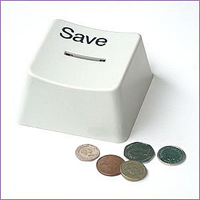
    picIt is important to teach your child the value of saving early in his life. If he understands the value of saving, it could make a very big difference in his life, in his future. Here are some ways to teach your child how to save:

    You can start with a piggy bank, which to a toddler can fall under the category of toys. You can weave the learning of saving with his play. Give him a real piggy bank or some variation of it, like a large plastic bottle or a box with a slot for the coins to pass through. Make him understand that the purpose of the piggy bank is for storing money. Start to explain that what is important is the act of saving and not the actual coins that accumulate in the piggy bank.

    When the child grows older, you can give him his first wallet. Guide him through the transition from collecting coins in his piggy bank to learning to handle paper money and understanding the power of currency: how it can buy things and how one easily can lose all his money if he is not careful with his spending. It is during this stage that you can see if your child is a saver or a spender.

    You can then move from the wallet to the savings account. If you have guided your child properly from the beginning, she should be able to save money in her wallet. Being able to keep one’s self from spending what is in one’s wallet is actually a feat for a child, and it must be recognized and rewarded. The idea of having a bank account could builda lot of self-esteem in your child, which she could use in decision making in the future. But, of course, you need to explain things like the minimum amount of money required to open a savings account and how money is safe when it is in the bank.

    Post to Twitter Tweet This Post

    Parenting Videos

    YouTube Preview Image

    Post to Twitter Tweet This Post


    Kids left you broke? Visit the IVA Forum for iva help and advice.

  • Friends