Categories

FOLLOW US ON TWITTER


Archives

  • 2010
  • 2009
  • 2008
  • Archive for December, 2008

    Books, Pictures, Stories, and Your Child

    When your child starts to show interest in books, the best thing that you, as a parent, can do is to encourage him. It is usually at the age of three that most children begin loving books. One very good way to build a strong bond with your child is through storytelling using books. It will get him acquainted with the joys of reading at an early age. Reading with your child does not mean that the two of you really go through real reading. You should not be bound by the words on the pages, you do not have to read the book to tell a story to your three year old. Use the pictures in the book as source of conversation, something that will lead your child to talk about his views and to learn more about the world.

    readingIt is normal for children to want to hear the same story many times; they even get to memorize their favorite stories after hearing them a few times. When your child has memorized a few stories, it is good to let him “read” the book. Your child surely will love the chance to “read” the story to you; he will be happy to show you how much he knows. When he sees that you appreciate his knowledge he will love learning even more. Children who are encouraged to learn early will never stop learning throughout life. A good technique in helping your child “read” his favorite story book to you is by asking him about the pictures in the book, by asking questions about the characters. At first, ask simple questions that start with “what” and “where”. Then when your child has built enough confidence in answering questions try asking some “why” questions. Don’t be surprised with his answers to your “why” questions. You’ll find out that at the age of three or four your child has so much knowledge already stored in his head that shape his views.

    Reading with your child is one good way to learn more about him and about how you fare as a parent.

    Post to Twitter Tweet This Post

    How to Find a Nanny

    NannyFinding a nanny for your child is easy; it is finding a good nanny who will take good care of your child that’s difficult. You can put up an ad, then screen applicants, or you can go directly to an agency. If you decide to hire a nanny yourself, make sure do you a careful background check before letting him/her into the house. Look into her criminal record and ask for at least two references to verify her credentials. Remember, you will be entrusting your house as well as the personal safety of your child to the nanny. Be thorough in your investigation.

    On the other hand, choosing an agency is convenient, and it will save a lot of time. However, it can be costly as well. Always select an agency that has a good reputation. Try not to do business with startups unless you know the owner personally. There is nothing wrong with using a new company, but it is better not to take the risk especially as your child is involved.

    Live-in or Live-out

    Even before you hire a nanny, you should have determined what living arrangement is appropriate for your needs. For example, if you have an unpredictable work schedule, it is better to have someone live-in so the needs of your family can be met. Live-in nannies typically receive room & board, food, and weekly salaries. But getting a reliable live-in nanny requires a drastic change in your lifestyle because the whole family will share their lives with another person. The nanny becomes more than just an employee; he/she becomes part of the family.

    Salary Considerations

    As was mentioned earlier, the family will need to provide board & lodging, food, and weekly salary to the nanny. However, there are other expenses involved, including healthcare benefits. Hiring a live-in nanny can be especially expensive if you hire someone with educational credentials. In addition, if you include the nanny in family outings, you will pay for the expenses.

    Post to Twitter Tweet This Post

    Little Fingers, Big Crayons

    Little children learn a lot when they are not aware that they are being taught. As parents, my wife and I try our best always to find ways to weave learning into our three year old son’s play. As early as when he was two years and a few months old we introduced our son to the world of visual arts. I was into drawing and painting, so it was only natural for me to at least expect that my little boy would have some artistic inclinations, too.

    crayonsWe bought him large crayons, of course the non-toxic ones that are safe for children. My wife told me that big crayons are better than the normal sized ones because kids as young as two or three do not have the motor skills yet for handling smaller objects. My son thought that the crayons were toys (big and fat crayons look like rocketships), and he played with them. I showed him how to make some lines with the crayons, but he managed only to make some unrecognizable slashes and hashings. It did not take long for me to notice that he was not interested in making lines or copying the lines I showed him. I was a bit disappointed. My wife suggested that we try to buy him bigger sheets of paper to draw on because small children have trouble making small arm and finger movements, and the small sheet could somehow hamper our son’s freedom of expression. So, we bought large drawing sheets for him.

    With the bigger drawing sheets my son started to make more explorations and discoveries with his big crayons. I stopped teaching him how to draw straight lines or simple shapes, I just watched him while he covered the sheets with unrecognizable slashes and scrawls and what seemed to be directionless lines. Then, as he produced more and more sheets full of crayon scrawls, I noticed that there was some sort of pattern in how he chose the colors to apply on the sheets. He did not use colors at random, he tended to use them in pairs.  That was an improvement, at least he knew his colors. Then later on shapes began to become more and more recognizable. I started to ask him questions about his “art”. “What is this?” I asked him, pointing to something that looked like a mangled fish. “It’s a house”, he told me. “And this is a tree, and this is a little puppy”, he continued to explain the other unrecognizable shapes he made on the sheets.

    I realized that everything he placed on the sheet had meaning to him, he was actually expressing something in his art in his own way.  I learned a lot from him that day.

    Post to Twitter Tweet This Post

    Want to Win $25?

    In the spirit of the holiday season, Wasabi Media Group is launching the Doubly Good December Contest.  This contest will reward one reader and one writer with a cash prize of 25 dollars each.

    In order to qualify for the reader’s prize, all you need to do is have a comment published* for any article posted during the month of December.  Comments will be accepted for this contest through January 7th.  One comment will be chosen randomly, and the author of that comment will receive $25!

    So, start reading, and submitting comments.  The more comments you submit, the more likely you are to win.

    *In order for a comment to be published, an editor will determine if the comment is relevant to the article and meets WMG’s standards for appropriate language.

    **Employees of Wasabi Ventures are not eligible to submit comments for this contest.

    Post to Twitter Tweet This Post

    Of Trucks and Toddlers

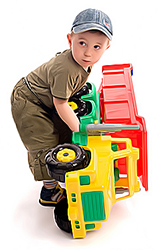
    TruckLittle children are fascinated with cars, trucks, and motor bikes. My little son loves motor vehicles, anything that has an engine and wheels surely will get his attention. Every time he sees a truck he’s filled with awe. The bigger a truck is and the more wheels it has, the more attractive it is to him. Every time we travel he is always on the lookout for trucks and cars. He has a comment for every truck or car that we encounter on the road. “Wow! A yellow truck with so many wheels,” he told me yesterday with eyes round with fascination for the big ten-wheeler truck that had just passed by.

    As a parent, I do my best to discover the things that are of interest to my child and use them as springboard for his learning. A few months ago he was introduced to the idea of going to school because of a school bus that we saw picking up children. He asked me what kind of “truck” it was. I explained to him that it was not a truck but a bus. “A bus?” he asked? “Yes, a bus. It is different from a truck. A truck carries big and heavy things, whereas a bus carries people, like children who are going to school,” I told him.

    Of course, that was the start of a long conversation between my three year old son and me about buses and schools and school children and teachers and books and everything good about going to school. He got excited about the idea of going to school and asked me if he can start schooling. I explained to him that it is too early for him to start schooling. “Maybe next year when you are already four years old you can start schooling,” I told him. He agreed with me, but the idea of going to school stayed with him for weeks.

    If we use the things that interest our children to start a conversation or spend time together, we can show them that their interests are important to us. This helps make learning fun for both parent and children.

    Post to Twitter Tweet This Post

    Parenting Videos

    YouTube Preview Image

    Post to Twitter Tweet This Post


    Kids left you broke? Visit the IVA Forum for iva help and advice.

  • Friends